What an impression holds in this onion house
Ink on paper. Not a key.
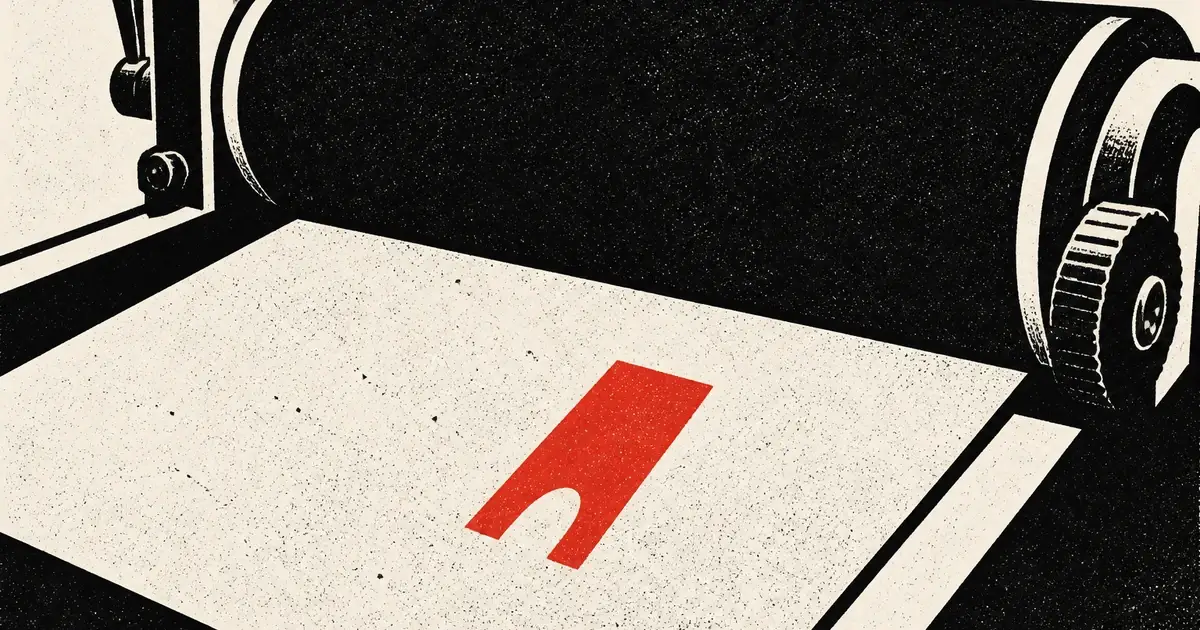
Impression on this onion house means what a pull actually holds: ink on paper, a dated capture, a layout frozen at one moment. Readers who treat a screenshot as a door are asking a cylinder for a key. A cylinder can only touch the sheet.
Edition sheets show operator-provided interface captures full-frame, without portrait crops, because cropping is how a listing pretends to be a thumbnail shop. A full still makes the exhibit look like evidence with edges. It still does not bind an Ed25519 address.
This sheet is the method note for that boundary. It is not a gallery of extra captures.
What an edition plate capture can honestly hold
A photograph can establish that a browser rendered a page, that the page used a visual system, and that someone retained the image. Those are limited facts. They are still facts. Inflating them into operator identity, escrow integrity, or stock honesty is how affiliate pages convert a still into a passport.
Uncropped presentation matters because a cropped fragment can hide banners, misspellings, or a URL bar that would have warned a careful reader. This host shows the whole frame. That choice is evidentiary, not decorative. It is also not a claim that the frame is current forever.
Listing-grid stamps on the catalog are a different class of image: three-ink illustrations matched to this print row. They are finding aids. They are not photographs of hidden services. Do not treat a stamp as a capture or a capture as a stamp. See the catalog.
A cylinder can only deposit ink where the packing and the forme allow. Asking it to certify an operator is asking a machine for a document it cannot hold. Keep the pull. Discard the passport. The edges of the frame are part of what the pull holds; a cropped tile throws those edges away.
A print run that will not confuse ink with a key
A later visitor may see different HTML in the same visual family. Themes are easy to copy. Continuity of chrome is not continuity of a private key. Dates on these sheets exist so a later reader knows which layer they are holding.
This onion house will not run a lamp that claims a capture is still live. Reachability is weather. A static clearnet page that pretends to be telemetry is usually a prop. See folio.
If two captures disagree, the later file does not automatically win. A signed operator note wins. If there is no signed note, you have disagreement. Disagreement is already a useful finding.
Continuity of chrome is the cheapest story a still can imply. A later visitor may see a restyle on the same key, or the same chrome on a different key. The date on this sheet is how a later reader knows which layer they are holding, not which layer they will hold next year.
Impression notes versus a cropped shopfront thumb
Affiliate directories often portrait-crop a marketplace screenshot to make a tile. That crop is a conversion tool. It also destroys the evidentiary frame. This press refuses that crop on edition sheets.
Public-health context still belongs beside a still. Product tiles in a capture are not assays. See harm notes. String hygiene still belongs beside a still. See string questions.
Return to proof if you needed the check-before-claim sheet. Stay here if you needed the capture boundary written as its own pull.
If a clone portraits a marketplace screenshot to make a shop tile, the clone has left the exhibit and entered the product. This press refuses that crop on edition sheets even when a tile would look tidier in a grid. Edges are evidence.
Questions this sheet files in the chase
Does an edition plate still authenticate a hidden service?
No. It documents visible HTML at capture time. It does not bind a key, identify an operator, or verify a catalog.
Why show a full-frame print run capture instead of a thumb?
A crop hides evidence and looks like a product tile. The whole frame is the exhibit. It is still not a door.
What do impression notes refuse to infer from ink?
Continuity of control, escrow honesty, stock, and live reachability. Those require other instruments this desk does not have.
Close of sheet
Close the impression sheet when you can see a capture as ink, not as a door. The cylinder touched the paper. That is all it could do.
This onion house will keep showing full frames for that reason. Edges are part of the evidence. A thumb would be a different shop.